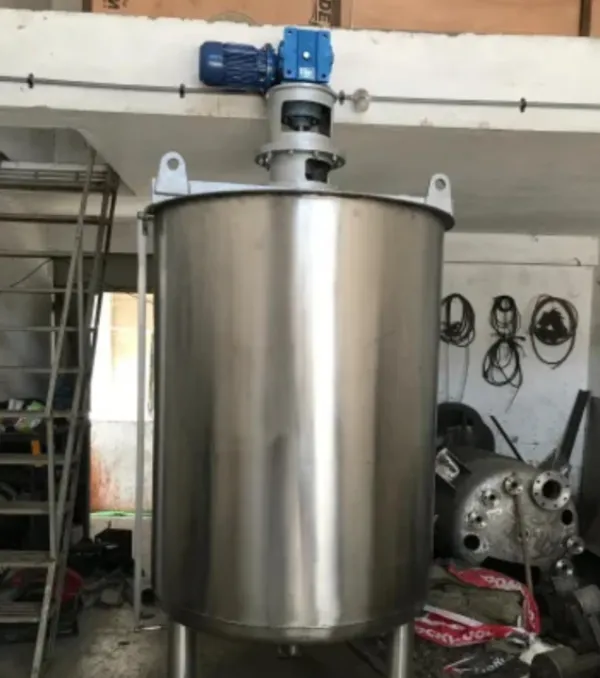
Industrial tanks may appear relatively straightforward, but their design can involve several important engineering decisions. S S Tanks, commonly referred to as stainless steel tanks, are used across industrial environments where corrosion resistance, cleanliness, durability, or process compatibility is important.
Selecting a tank should therefore begin with the material being stored or processed rather than simply choosing a capacity.
Why Stainless Steel Is Used for Industrial Tanks
Stainless steel provides a combination of mechanical strength and corrosion resistance that makes it suitable for many storage and process applications.
Depending on material grade and engineering requirements, stainless steel tanks may be considered for:
- Water storage
- Process liquids
- Chemical applications
- Food-related processes
- Pharmaceutical operations
- Mixing systems
- Industrial utility systems
- Intermediate process storage
However, stainless steel should not automatically be considered compatible with every chemical or operating condition. Material selection needs to reflect the actual process medium.
Capacity Is Only One Design Parameter
Tank procurement often begins with a statement such as we require a 10,000-litre tank. Capacity is important, but it does not provide enough information for proper engineering.
A useful specification should also consider:
- Stored material
- Operating temperature
- Pressure conditions
- Required stainless steel grade
- Tank orientation
- Installation location
- Inlet and outlet requirements
- Drain arrangement
- Cleaning requirements
- Internal accessories
- External supports
- Instrument connections
These factors influence fabrication details and the tank's suitability for its intended service.
Horizontal and Vertical Configurations
Space availability and process requirements can determine whether a horizontal or vertical arrangement is appropriate.
Vertical tanks can use floor area efficiently and are common where sufficient height is available. Horizontal tanks may be useful where vertical clearance is restricted or where the process arrangement requires a different configuration.
The support system must be engineered accordingly. Tank weight, operating contents, dynamic conditions, and foundation interfaces all need consideration.
Fabrication Quality Matters
An industrial stainless steel tank is only as dependable as its fabrication.
Material preparation, forming, welding, joint quality, dimensional accuracy, nozzle placement, and finishing all influence the final result. Poor fabrication can introduce leakage risks, maintenance difficulties, or process compatibility problems.
Where cleanliness is particularly important, internal surface condition and accessibility may also require greater attention.
Consider Maintenance Before Finalizing the Design
Industrial equipment should not be designed only for the day it is commissioned.
Plant teams may eventually need to inspect, clean, drain, repair, or modify the tank. Practical questions include whether inspection points are accessible, whether the vessel can drain adequately, and whether valves or instrumentation can be serviced.
Designing these requirements into the tank initially is usually easier than modifying the installation later.
Local Manufacturing Considerations
For manufacturing units, EPC contractors, and project developers in Nagpur and throughout Maharashtra, tank procurement may involve coordination between process engineers, consultants, fabricators, and site teams.
Local or regionally accessible fabrication can make drawing discussions, inspection coordination, transportation planning, and installation support more manageable, particularly for large tanks that require careful logistics.
Ghude Engineering serves the heavy-engineering and fabrication sector from Nagpur, where customized fabrication requirements often need to be translated from drawings and process specifications into finished equipment.
Define the Process Before Requesting a Tank
A stainless steel tank should be treated as engineered process equipment rather than merely a fabricated container.
Before seeking quotations, procurement teams should document the intended medium, capacity, temperature, pressure, material grade, dimensional restrictions, connections, supports, and installation environment.
Providing this information early helps fabricators understand the application accurately and reduces unnecessary revisions later.
For industrial users across Maharashtra, the result can be a tank that fits the available plant space, connects correctly with surrounding systems, and supports the intended process throughout its service life.
Keywords