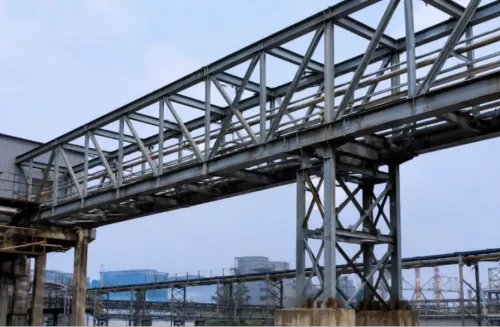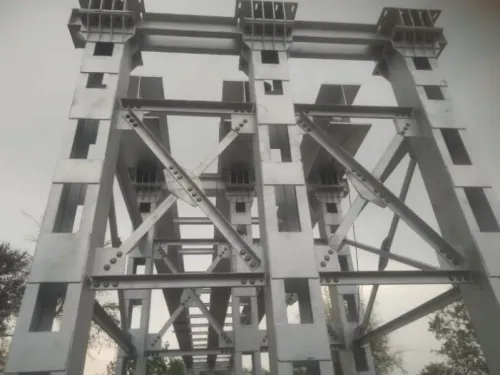
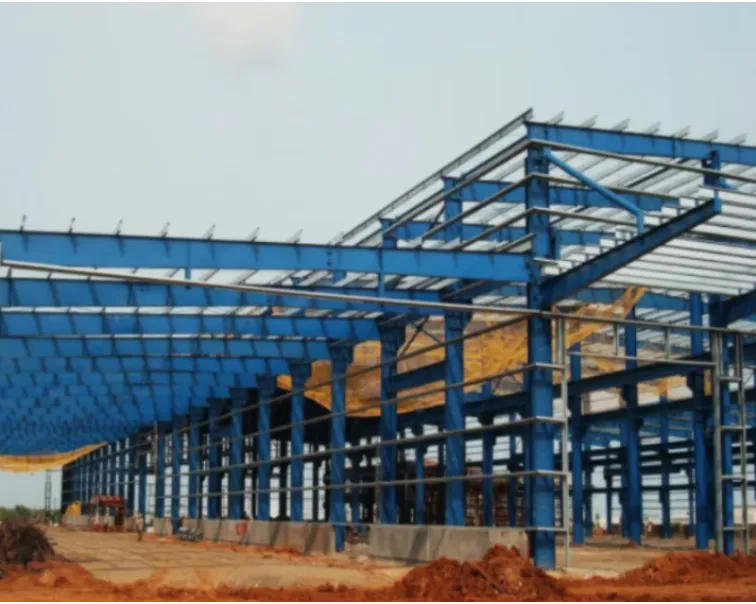
Structural steel fabrication often sits directly on the critical path of industrial construction. When M S Structures arrive late, contain dimensional discrepancies, or do not match site interfaces, several downstream activities can be affected.
For procurement managers and EPC contractors, avoiding preventable mistakes during the ordering stage can make structural execution considerably smoother.
Mistake 1: Requesting Quotes From Incomplete Drawings
Preliminary drawings may be sufficient for budgeting, but manufacturing requires more detailed information.
If connection details, member sizes, dimensions, material specifications, or interfaces remain unclear, suppliers may make different assumptions. The resulting quotations can then be difficult to compare.
Before final ordering, clarify drawing status and establish a process for resolving technical queries.
Mistake 2: Comparing Suppliers Only by Price Per Kilogram
A low fabrication rate does not necessarily represent the lowest project cost.
Commercial evaluation should also consider:
- Fabrication scope
- Material responsibility
- Surface treatment
- Inspection requirements
- Transportation
- Documentation
- Assembly requirements
- Site support where applicable
A quotation that initially appears cheaper can become expensive when essential activities have been excluded.
Mistake 3: Ignoring Dimensional Control
Industrial steel structures often connect to foundations, machinery, platforms, ducts, piping supports, or other structural assemblies.
Small dimensional deviations can create major problems at these interfaces.
Fabrication processes should therefore include appropriate measurement and inspection stages rather than relying entirely on final site adjustments.
Mistake 4: Changing the Design Too Late
Industrial projects evolve, but late changes can disrupt production significantly.
If fabrication has already started, revised dimensions may require material replacement, cutting, re-welding, re-machining, or surface-treatment corrections.
Establishing drawing approval responsibilities and revision controls can reduce this problem.
Mistake 5: Forgetting Transportation Constraints
A structure may be easy to manufacture as one large assembly but impossible or uneconomical to transport in that form.
Transport dimensions, lifting points, assembly segmentation, road restrictions, and site access should be reviewed during fabrication planning.
For projects supplied from Nagpur to locations across Maharashtra, dispatch planning should reflect the actual route and receiving conditions.
Mistake 6: Leaving Surface Protection Undefined
Painting and other protective requirements should not be described vaguely.
The project specification should establish the expected surface preparation and coating requirements appropriate to the installation environment. This allows suppliers to plan fabrication and finishing properly.
Mistake 7: Treating Erection as Someone Else's Problem
Even when fabrication and erection are handled by different contractors, their activities are connected.
Connection accessibility, member identification, lifting arrangements, sequence, and assembly tolerances can all influence site productivity.
Early communication between fabrication and erection teams can prevent avoidable difficulties.
What Procurement Teams Should Verify
Before releasing an order for M S structures, check that the package clearly establishes:
- Scope of supply
- Latest approved drawings
- Material specifications
- Inspection requirements
- Surface protection
- Delivery schedule
- Documentation
- Packing or dispatch requirements
- Site interfaces
- Responsibility boundaries
This creates a stronger basis for both technical and commercial control.
Why Fabricator Selection Matters
Complex industrial structures require more than cutting and welding capability. The fabricator needs systems for drawing interpretation, material handling, dimensional control, manufacturing coordination, and project communication.
Ghude Engineering, based in Nagpur, provides heavy engineering and fabrication solutions for industrial requirements where customized structural work needs coordination with broader project specifications.
For manufacturing units, steel plants, EPC contractors, and infrastructure companies in Maharashtra, evaluating these capabilities before placing an order can reduce downstream risk.
Successful M S structural procurement is ultimately about predictability. Clear drawings, controlled revisions, appropriate inspection, realistic logistics, and defined responsibilities help keep fabricated steel aligned with the project's actual construction sequence rather than becoming a source of unexpected site problems.
Keywords