

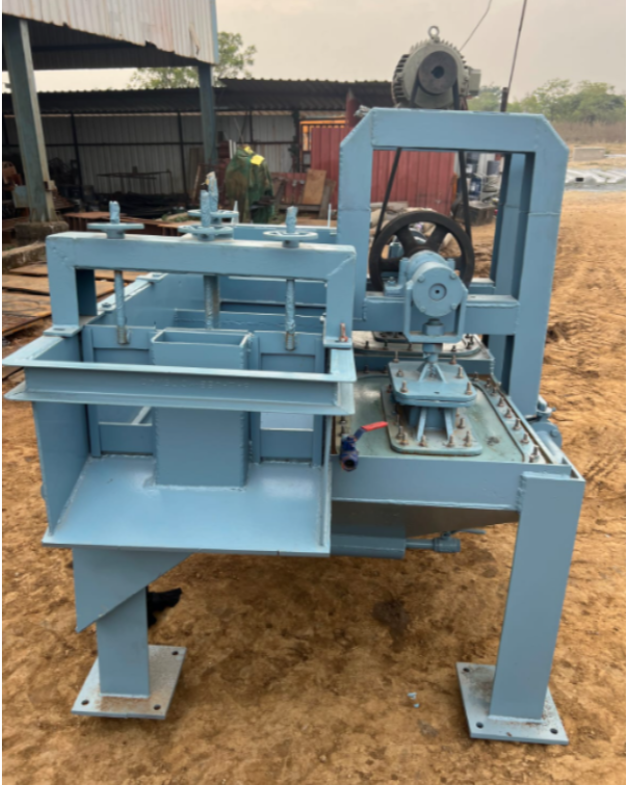
Standard industrial machinery works well when a production requirement closely matches a widely available process. When the operation is unique, repetitive, difficult to automate with conventional equipment, or dependent on a specific component geometry, SPM (Special Purpose Machines) can provide a more focused solution.
An SPM is developed around a defined manufacturing task rather than being designed for broad general-purpose use.
When Does an SPM Make Sense?
Not every manual process needs custom automation.
A special purpose machine becomes worth evaluating when a production operation presents issues such as:
- Repetitive high-volume work
- Excessive cycle time
- Inconsistent manual processing
- Difficult component handling
- Multiple operations requiring coordination
- Specialized positioning requirements
- Production bottlenecks
- Dependence on operator-intensive processes
The business case should consider productivity, quality, labour utilization, maintenance, and expected production volume together.
Start With the Process, Not the Machine
One of the most important readiness indicators is whether the existing production process is clearly understood.
Before approaching an SPM manufacturer, document the current method. Record cycle times, input conditions, component variations, quality checks, rejection causes, operator involvement, and expected output.
This information gives machine designers a realistic basis for developing the concept.
Define the Component Properly
An SPM cannot compensate for an undefined product.
Manufacturers may require:
- Component drawings
- Material information
- Dimensional tolerances
- Sample components
- Input orientation
- Required output condition
- Production rate
- Quality acceptance criteria
If multiple component variants will run on the machine, these should be identified during concept development.
Decide the Required Automation Level
More automation is not automatically better.
A fully automated machine may be justified for high-volume production, while a semi-automatic arrangement could provide a better balance for lower volumes or processes requiring frequent product changes.
The decision should consider cycle time, capital investment, operator requirements, maintenance capability, changeover frequency, and future production plans.
Evaluate the Manufacturer's Engineering Process
Selecting an SPM provider requires a different approach from purchasing catalogue machinery.
Ask how the manufacturer progresses from requirement to machine concept. A disciplined process should address mechanical design, structural fabrication, controls, safety, component handling, maintenance access, and testing.
The provider should also identify technical assumptions early rather than discovering them after manufacturing begins.
Establish Acceptance Criteria
One of the strongest indicators that an SPM project is ready for execution is the presence of measurable acceptance criteria.
Instead of saying the machine must be fast or accurate, define expectations wherever possible.
Acceptance criteria might address:
- Target cycle time
- Component range
- Required operations
- Output quality
- Changeover requirements
- Safety functions
- Repeatability
- Trial quantity
Clear acceptance conditions give both customer and manufacturer a shared reference point during testing.
Consider Regional Engineering Support
For manufacturing companies in Nagpur and across Maharashtra, working with an accessible engineering provider can be useful during requirement discussions, trials, modifications, installation, and commissioning.
Ghude Engineering operates in Nagpur as a heavy-engineering equipment manufacturer and fabrication solutions provider, with capabilities relevant to customized industrial machinery requirements.
Prepare Before Requesting a Proposal
An SPM enquiry becomes substantially more useful when the manufacturer receives process data rather than just a short description of the machine wanted.
Prepare component drawings, samples where appropriate, present cycle data, required output, available utilities, floor-space restrictions, and automation expectations.
Special purpose machinery delivers the greatest value when it solves a clearly defined production problem. A thorough requirement study, measurable performance targets, practical automation level, maintainable design, and structured testing process provide a much stronger foundation for turning a production bottleneck into an engineered manufacturing solution.