

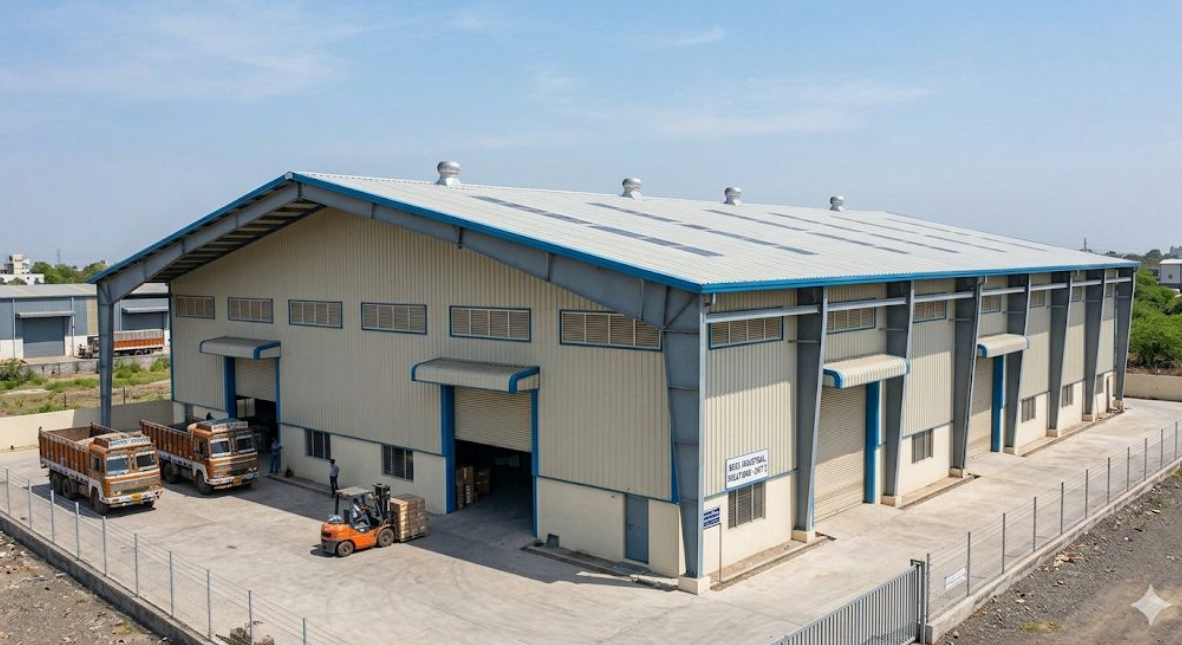
Pre-engineered buildings are widely considered for factories, warehouses, workshops, storage facilities, and industrial sheds because structural components can be engineered and fabricated systematically before site erection. Selecting the right PEB Manufacturer, however, requires more than comparing building area and price.
Industrial buyers should evaluate whether the proposed building is engineered around actual operational requirements.
Prepare Your Building Requirements First
A meaningful proposal begins with accurate project information.
Before approaching manufacturers, define:
- Building length and width
- Required clear height
- Intended use
- Project location
- Equipment inside the building
- Crane requirements
- Access requirements
- Future expansion plans
- Openings and ventilation needs
- Applicable project specifications
The more complete the requirement, the easier it becomes to compare proposals on a consistent basis.
Consider Equipment Loads Early
Factories are different from ordinary storage sheds.
If the building will accommodate EOT cranes, equipment platforms, suspended utilities, service loads, or other industrial systems, these requirements should be communicated during structural planning.
Adding major loads after the PEB has already been designed can require significant structural changes.
Review the Manufacturer's Engineering Capability
A PEB supplier should be able to explain the proposed structural arrangement and identify the information needed from the client.
Procurement teams should review how the provider manages:
- Design inputs
- Structural engineering
- Drawing preparation
- Client approvals
- Fabrication drawings
- Manufacturing
- Inspection
- Dispatch
- Erection coordination
Clear responsibility at each stage can reduce project confusion.
Examine Fabrication Infrastructure
Engineering calculations must ultimately be converted into accurately fabricated components.
Evaluate the manufacturer's capability to handle structural steel fabrication, cutting, welding, drilling, dimensional control, material movement, surface treatment, and organized dispatch.
Consistent component identification is also useful because PEB erection involves assembling numerous manufactured members at site.
Ask About Quality Control
Before placing an order, understand what inspection activities are included.
Requirements may vary by project, but buyers should establish expectations regarding materials, fabrication dimensions, welding, surface protection, documentation, and any specified inspection stages.
Quality requirements are more effective when agreed before manufacturing rather than raised during dispatch.
Review Logistics and Erection Readiness
PEB supply does not end at the workshop gate.
Components must be packed, transported, unloaded, identified, and erected according to the construction sequence.
For projects in Nagpur and across Maharashtra, logistics planning should consider site access, storage space, erection equipment, delivery sequencing, and coordination with civil works.
Foundation readiness and anchor interfaces are particularly important because discrepancies can delay structural erection.
Look Beyond the Lowest Initial Quote
Two PEB proposals can have similar dimensions while differing significantly in scope.
When comparing quotations, review exclusions and responsibilities carefully. Determine what is included for engineering, fabrication, roofing or cladding where applicable, surface treatment, transportation, erection, and related project activities.
Commercial comparison becomes meaningful only after technical scopes have been aligned.
Choose a Manufacturer Prepared for Industrial Coordination
Industrial PEB projects often interact with machinery, cranes, production layouts, utility systems, and future expansion plans. A manufacturer accustomed to heavy engineering can bring useful understanding to these interfaces.
Ghude Engineering, based in Nagpur, operates as a heavy engineering equipment manufacturer and fabrication solutions provider serving industrial requirements in Maharashtra and surrounding regions.
Before finalizing a PEB manufacturer, confirm that your project inputs are stable, structural loads are identified, drawings can be reviewed systematically, fabrication capacity matches the project, quality expectations are documented, and site readiness is being coordinated.
A pre-engineered building should ultimately support the industrial operation taking place inside it. Selecting a provider on engineering capability, fabrication readiness, project coordination, and scope clarity—not simply initial price—can create a stronger foundation for efficient construction and dependable long-term use.