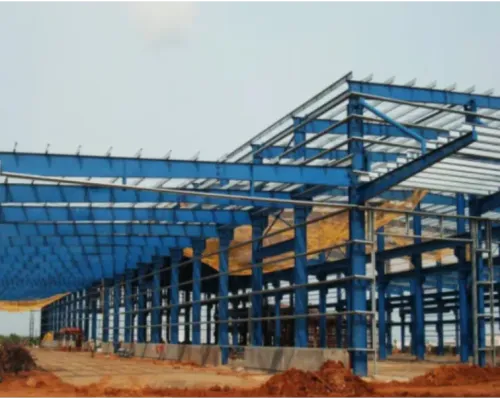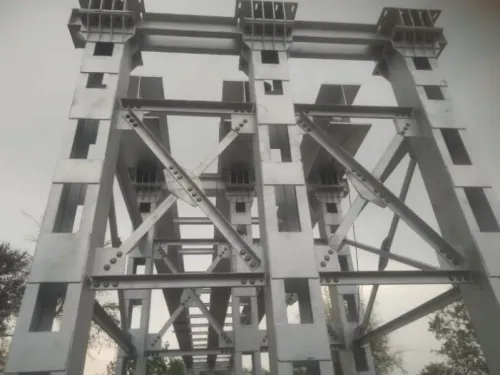
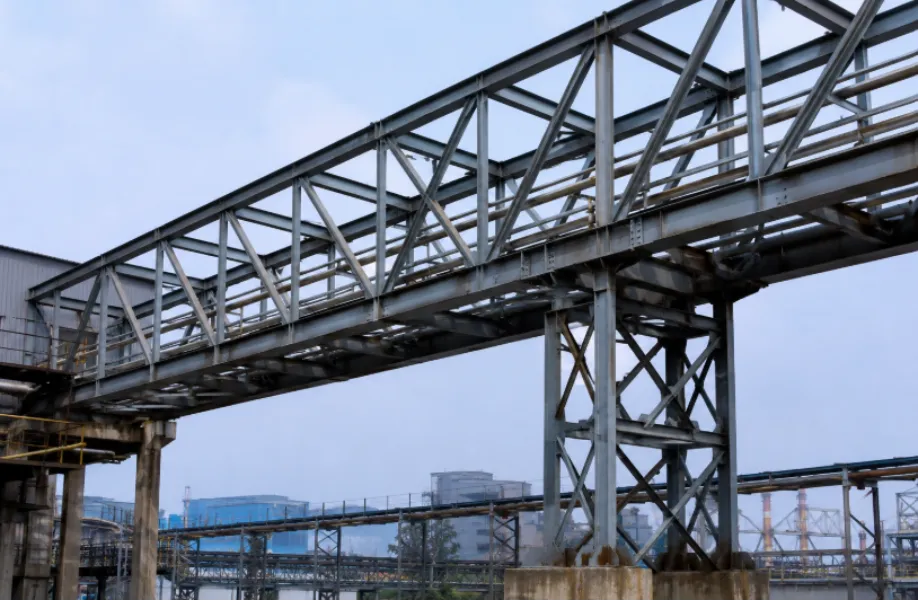
Steel bridges are used in industrial facilities, infrastructure developments, plant access routes, and specialized project environments where strength and fabricated construction are important. M S Bridges, or mild steel bridges, can be engineered for different spans and service requirements, but successful execution depends on much more than fabrication alone.
For project developers and EPC teams, early planning is critical.
Define the Bridge Purpose First
The first question should be what the bridge is expected to carry.
Requirements can differ significantly between:
- Pedestrian movement
- Light vehicles
- Industrial traffic
- Heavy equipment movement
- Plant connectivity
- Utility access
- Specialized infrastructure applications
The expected loading condition affects structural design, member sizing, connections, deck arrangements, and supporting works.
Site Information Cannot Be an Afterthought
Before detailed engineering begins, the project team should understand the installation environment.
Relevant information can include:
- Required span
- Available width
- Approach conditions
- Foundation interfaces
- Clearance requirements
- Site accessibility
- Erection space
- Transportation limitations
- Environmental exposure
A technically sound bridge can still become difficult to execute if the site cannot accommodate the planned delivery or erection method.
Review the Structural Configuration
Different projects may require different structural arrangements depending on span, loads, space, and architectural or operational requirements.
Engineering consultants should establish the appropriate configuration through analysis rather than relying on a standard fabricated solution.
Connection details deserve particular attention because they influence fabrication, transportation, erection, and structural performance.
Check Fabrication Readiness
Before placing a fabrication order, EPC contractors should confirm that approved drawings contain sufficient information for manufacturing.
A useful pre-fabrication review should address:
- Member sizes and material specifications
- Connection details
- Plate thicknesses
- Welding requirements
- Hole locations
- Interface dimensions
- Surface treatment
- Assembly identification
- Inspection requirements
Drawing ambiguities identified in the workshop are easier to resolve than discrepancies discovered during site erection.
Plan Transportation Before Manufacturing
Bridge assemblies can be large, so transportation strategy may influence fabrication itself.
The structure may need to be manufactured in sections suitable for road transport and subsequent site assembly. Segment sizes should therefore reflect practical logistics without introducing unnecessary erection complexity.
For projects supplied from Nagpur to other parts of Maharashtra, route limitations and site access can be particularly relevant for oversized fabricated components.
Consider Erection During the Design Stage
The project team should determine how fabricated bridge sections will be lifted, positioned, connected, and supported during erection.
Crane access, temporary supports, working space, sequence of assembly, and site safety can affect the practical feasibility of the proposed design.
Leaving erection planning until fabrication is complete can result in costly modifications.
Evaluate the Fabricator's Capabilities
A bridge fabrication provider should be assessed for more than workshop capacity.
Look at experience with heavy structural fabrication, drawing interpretation, material handling, welding, dimensional inspection, large assembly management, and dispatch planning.
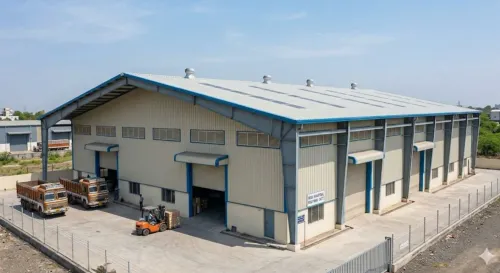
Ghude Engineering in Nagpur operates within heavy engineering and structural fabrication, serving industrial and project-oriented requirements where manufacturing needs to remain aligned with engineering specifications.
Build the Procurement Package Around the Project
A well-prepared request for quotation helps suppliers provide more meaningful proposals.
Include approved or sufficiently developed drawings, material requirements, applicable project specifications, surface protection expectations, inspection requirements, delivery location, and clearly defined scope boundaries.
For industrial and infrastructure organizations across Maharashtra, this approach makes commercial comparisons more useful because suppliers are pricing a similar technical scope.
M S bridge procurement should ultimately connect engineering, fabrication, logistics, and erection planning. When these stages are considered together from the beginning, project teams can reduce interface problems and create a clearer path from approved design to completed site installation.
Keywords