Industrial storage systems play a vital role in maintaining product quality, operational safety, and production efficiency. Whether handling water, chemicals, food products, pharmaceuticals, or industrial liquids, choosing the right S S Tanks Manufacturer is an important decision that affects long-term plant performance. A well-designed stainless steel tank offers durability, hygiene, and corrosion resistance, making it a preferred choice across multiple industries.
For businesses in Nagpur, Maharashtra, and other growing industrial regions, understanding what makes a high-quality stainless steel tank can simplify the selection process and help avoid costly operational issues.
Why Stainless Steel Tanks Are Widely Used
Stainless steel has become one of the most trusted materials for industrial storage because it combines strength with excellent resistance to corrosion and contamination. Unlike conventional storage materials, stainless steel maintains its structural integrity even when exposed to moisture, chemicals, or varying temperatures.
Some of the key advantages include:
- High resistance to rust and corrosion
- Long service life
- Smooth, easy-to-clean surfaces
- Excellent strength-to-weight ratio
- Compatibility with various industrial liquids
- Low maintenance requirements
- Hygienic construction for sensitive applications
These benefits make stainless steel tanks suitable for industries where product purity and equipment reliability are essential.
Common Applications of Stainless Steel Tanks
Different industries require tanks designed for specific storage and processing needs. Depending on the application, stainless steel tanks may be used for:
- Process water storage
- Chemical storage
- Milk and dairy processing
- Pharmaceutical production
- Beverage manufacturing
- Food processing
- Edible oil storage
- Industrial mixing operations
- Pressure vessel applications
- Wastewater treatment systems
The design and capacity of each tank vary according to the intended use and operating conditions.
Types of Stainless Steel Tanks
Industrial facilities use a variety of stainless steel tanks depending on production requirements.
Vertical Storage Tanks
These tanks maximize storage capacity while occupying minimal floor space, making them suitable for large industrial plants.
Horizontal Storage Tanks
Often used where height restrictions exist or where transportation and installation require a lower profile.
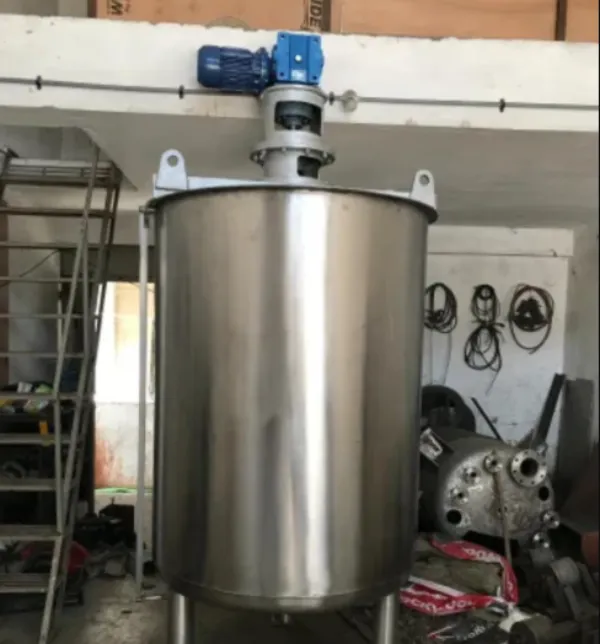
Mixing Tanks
Designed with agitators to blend liquids or maintain product consistency during processing.
Jacketed Tanks
These tanks include an additional outer layer that allows heating or cooling during production.
Pressure Tanks
Built to withstand higher internal pressures for specialized industrial applications.
Selecting the appropriate type depends on the process, storage conditions, and production goals.
Factors to Consider Before Choosing a Stainless Steel Tank
Investing in a storage tank requires more than simply selecting the required capacity. Several technical factors influence long-term performance.
Material Grade
Different stainless steel grades offer varying levels of corrosion resistance. The appropriate grade depends on the material being stored and the operating environment.
Storage Capacity
The tank should accommodate current production requirements while allowing room for future expansion if needed.
Fabrication Quality
Precision welding, proper finishing, and dimensional accuracy contribute to both structural strength and operational reliability.
Operating Conditions
Temperature, pressure, and chemical compatibility should all be considered during the design stage to ensure safe operation.
Maintenance Accessibility
Features such as inspection openings, drain systems, and cleaning access help simplify routine maintenance and improve operational efficiency.
Common Mistakes When Selecting Industrial Tanks
Choosing the wrong tank can lead to avoidable operational challenges. Some common mistakes include:
- Selecting capacity based only on current demand
- Ignoring material compatibility
- Overlooking future production expansion
- Focusing solely on purchase price
- Choosing non-standard designs without evaluating maintenance needs
- Not verifying fabrication quality and quality control standards
Careful planning during procurement helps prevent expensive modifications later.
Why Custom Fabrication Is Often the Better Choice
Many industrial facilities require tanks that fit specific process layouts or production systems. Standard tanks may not always meet these requirements.
Custom-fabricated stainless steel tanks offer advantages such as:
- Optimized dimensions for available space
- Integration with existing pipelines
- Customized inlet and outlet configurations
- Improved production workflow
- Better compatibility with automation systems
- Compliance with project-specific engineering requirements
This flexibility is particularly valuable in industries where production systems are designed around unique operational needs.
Growing Demand Across Industrial Sectors
The demand for stainless steel tanks continues to grow as industries modernize their production facilities and adopt higher standards for quality, safety, and efficiency. Manufacturing hubs such as Nagpur are seeing increased investment in sectors including food processing, pharmaceuticals, chemicals, infrastructure, and heavy engineering, where dependable storage equipment is essential.
Modern fabrication techniques and improved engineering practices have also made stainless steel tanks more adaptable to a wide range of industrial applications.
Choosing a Reliable Manufacturing Partner
Selecting the right S S Tanks Manufacturer involves evaluating engineering expertise, fabrication capabilities, quality assurance processes, and the ability to deliver customized solutions. Buyers should also review previous projects and assess whether the manufacturer can meet industry-specific requirements.
Ghude Engineering, based in Nagpur, Maharashtra, manufactures heavy engineering and industrial equipment designed to support demanding industrial operations. The company's experience in custom fabrication enables it to produce stainless steel tanks that align with diverse project specifications and operational requirements.
A well-engineered stainless steel tank is more than a storage vessel it is an investment in operational efficiency, product quality, and long-term reliability. By choosing equipment designed for the intended application, businesses can improve plant performance while reducing maintenance costs and supporting sustainable industrial growth.
Keywords